

What is a BAA? [Show Notes]
Boost your understanding of BAA – the key to ensuring HIPAA compliance for healthcare organizations. Don’t miss out on this valuable resource!
Transcript
Note: This video is transcribed using AI therefore some errors have occurred in the transcription of this video.
Hello everyone, this is Alex from Stressless Therapist here and I want to give you a little snippet from one of the lessons that I do on opening a private practice, but more specifically it’s going to be looking at what is a BAA (Business Associate Agreement) and why is it important for your practice. Let’s get ready to dive right in. Before we do, I want to do kind of a little disclaimer. I am not a lawyer, so this is purely for educational purposes. This is not considered legal advice. If you have legal questions specific to your practice, I strongly recommend that you reach out to a lawyer that specializes in small businesses if not private practices in particular. But, I’m hoping that this information is going to at least educate you on what the very questions could be if you wanted to reach out to a lawyer, as well as kind of knowing what paperwork is needed to get your business off the ground. So, the Business Associate Agreement. Now, this is something when I first started Private Practice, I had no idea what this was or what it covered or what it even meant, quite frankly. This is an important piece of documentation to have in your practice. It’s not going into a client record, it’s something that you keep in your own files. More from the business perspective, what this piece of paper is, it’s an agreement between you and an outside agency, a different person that basically extends the HIPAA protection. So, perfect example would be if I am working with Google, right? I’m working with Google suite for my phone and my email, and I’m going to be talking to clients about clinical things, right? Things that need to be protected by HIPAA. In order for Google to be legally bound to protect that information, there needs to be an agreement. You can’t just have an email and assume it’s private, right? Because the way technology works, there’s always cookies, there’s always something that can kind of tag and link the conversation and have it refound. So, to have extra protection on those clinical conversations, right, Google needs to be one aware of it and two have the technology in place to protect it. So, that is what a Business Associate Agreement is about, it’s essentially saying, “Hey Google, this is sensitive information, I need you to keep it private, right?” And more importantly, if there is a breach of that privacy, you need to let me know this way because I let my clients know is essentially what they’re saying, right? Not every company offers this, and if they don’t, that’s something for you to strongly consider of if you are going to be working with them and why you want to work with them particularly. I find a lot of kind of companies that work with mental health and kind of other practices where HIPAA is required, this is the standard part of their onboarding piece. Now, mind you, it usually is part of their paid program. For example, Zoom. You’re not going to be getting a BAA with Zoom on the free program. However, if you do upgrade to the premium service, that is a part of their agreement. Same thing with Google versus Google Suite. Regular Google does not have a BAA versus Google Suite the professional version does. Simple Practice also has a BAA with it. I’m trying to think of any other ones off the top of my head that I use. I think for Alma, I believe had the BAA with it right off the bat that I didn’t have to ask for. That is all that is coming to mind off the top of my head. Now, there might be people that are outside of that that are frequently having kind of access to privileged information. For example, an accountant, right? That would be another person to sign a BAA with a clinical supervisor or peer supervision might be something to consider especially if Private health information is being shared. Even as far as this might sound silly, hear me out for a second. Even office personnel, whether that is an assistant, an administrator, or a housekeeper, can technically access these records. So, if you have an office that does paper records and the chart is unlocked, and you have a custodial crew coming at the end of the day, if they come across a piece of paper, this basically is saying, “hey, what you see here stays here” kind of thing. If there is a breach, the liability, I mean, it’s still on you a bit for leaving the paper out, don’t get me wrong, but they share some of that burden if they go out and then share it to the press or something like that. Request they signed an agreement where they said that they would not, whereas if you don’t have that in place and they find something and they leak it, well, now it’s definitely all on your shoulders. I mean, it was a large part before. You should always have your records in a secure location, locking key. They shouldn’t be just lying around throughout the day, but I mean it’s not uncommon to have business personnel interacting with day-to-day activities during working hours. So when in doubt, it’s always kind of important to have it just in case. For those of you who are going to be doing a telehealth exclusive practice from home, don’t think that you’re excluded from this. Again, there are people like your accountant, anybody that kind of helps with the technology piece of it and it’s having access to the private information that very well might include your spouse. Especially if you’re looking to just C.Y.A. to make sure you’re protected, if you are having sessions and you’ve done all the sound proofing, but you want to be triple sure that everything stays here from a legal perspective, just have your spouse sign it. It sounds crazy, it sounds paranoid, it probably a little bit is, but I prefer to work on the philosophy of better safe than sorry. So literally a piece of paper, it’s signed, it’s not like you’re signing your soul away, but it’s basically them acknowledging that private information stays private and if there is a breach that they will let you know. This way you can identify the clients as appropriate.
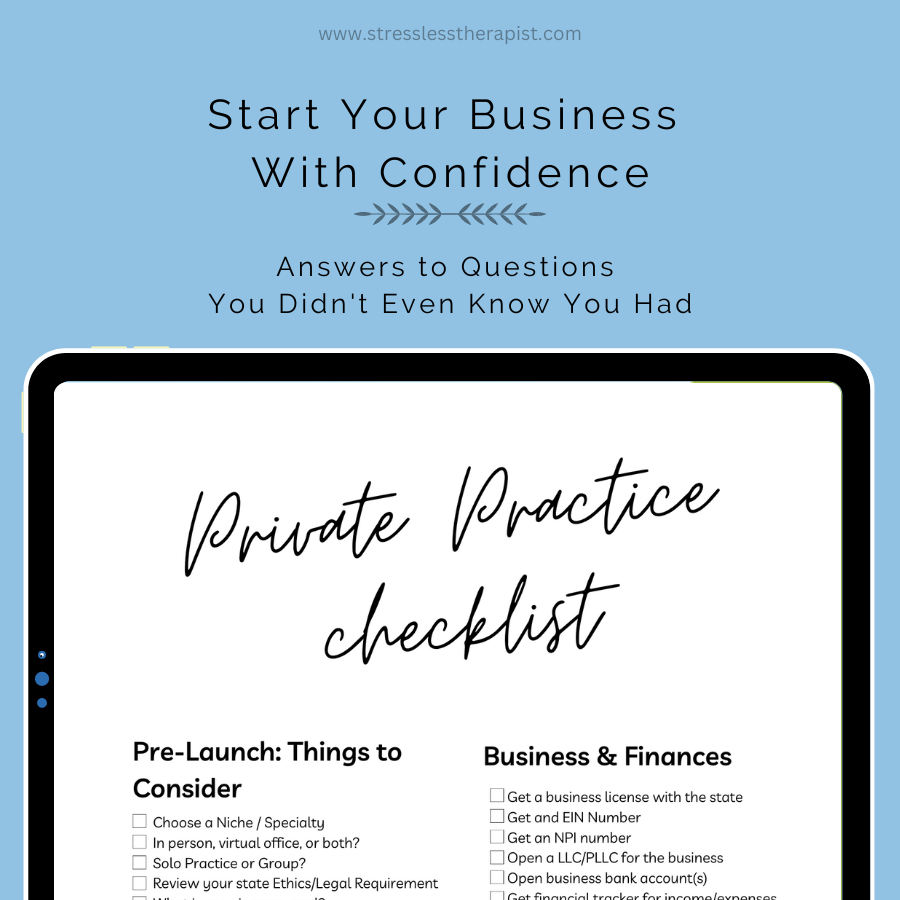
Again, it sounds really scary, not very scary in reality. It’s a very common form for this field. There are samples if you Google “Be a sample agreements”, a whole bunch will pop up throughout the internet, so I wouldn’t worry too much about the template piece of it in particular. Hello again, so how was that? Hopefully informative and not too scary. I know things legal and paperwork wise can really get the heart fluttering and feel overwhelming, but I promise you once you get in it and once you start working with these things on a daily basis, you can see they’re a lot more bark than they are bite. So I’m hoping that this kind of eases some of your anxieties, builds that confidence level that you can do this. If you have more questions in related to how do you start your private practice and what other things are involved, please join me for my mini lesson on “Stress Less About Starting a Private Practice”. I will link to that below so you can check it out for yourself, learn all the behind-the-scenes tips, tricks and things that I did to get my business up and running. It’s going to include all the kind of businessy legal stuff, how do you register for things like EINs and NPI numbers and what those even mean, as well as giving an outline of what paperwork, what are the processes that you need to do to get your business off the ground. So again, I hope this is really helpful advice. I want to give you kind of a little tidbit to give you an idea of the world that you’re going to be diving into. And if you’re interested in that training for more detailed information on this and other topics, I will link to that below so you can join us. And I can’t wait to see what you build. Take care for now. Bye-bye, guys.
Affiliate Disclosure
Some of the links on this website are affiliate links, which means that I may earn a commission if you click on the link or make a purchase using the link. When you make a purchase, the price you pay will be the same whether you use the affiliate link or go directly to the vendor’s website using a non-affiliate link.
For your convenience we have listed our affiliate partners here: Amazon, Headway, Alma, Kate Doster, Elizabeth Goddard, Tonic Site Shop, Branden Drake, Canva, Mailerlite, ConvertKit, WordHero AI, ThriveCart, Airtable, System io, SimplePractice.
Though the products may not created by us, our opinions of the products are entirely our own. We only recommend products that we love and stand behind in hopes they help you as much as they helped us. By using the affiliate links, you are helping support this website, and I genuinely appreciate your support as it helps me to continue to create content such as this.
Additional Show Links
As a marketing coach and mentor for mental health professionals, I specialize in helping therapists grow their practices through authentic and ethical marketing strategies. By focusing on blogging, SEO, and email marketing, I guide therapists to attract clients who genuinely resonate with their expertise, fostering meaningful connections and long-term success. My mission is to support you in building a practice that not only thrives but also remains sustainable and fulfilling—without the stress and burnout that often come with the journey.
Below is a sample of what I have to offer, if you have any questions please feel free to reach out to me via email at hello@stresslesstherapist.com.
Free Stuff:


Product/Service Reviews
- Complete Review of Headway
Discover the ins and outs of using Headway for private practice. From benefits to drawbacks, this review gives you everything you need to know to decide if it’s the right client management platform for your practice. Read now. - Complete Review of Alma
Curious about Alma? Get the full scoop on this platform for private practitioners, including key features, pricing, and how it stacks up against competitors. Check out the review. - Complete Review of Simple Practice
Is Simple Practice worth it for your private practice? Dive into this detailed review covering its features, functionality, and how it can support your business. Learn more.
Popular Blog Posts
- Popular Mental Health Book Recommendations
Looking for insightful reads? Explore my top mental health book picks for this year, perfect for therapists and clients alike. Discover the list. - Best Therapeutic Children’s Books
Enhance your practice or parenting toolbox with this curated list of children’s picture books that tackle mental health topics in accessible, thoughtful ways. Browse the collection. - Products I Swear By as a Private Practice Owner
Running a private practice is easier with the right tools. Check out my tried-and-true products that keep my business thriving. See the essentials.
Instant Download Course
- Mastering Clinical Documentation With Speed and Efficiency
Streamline your notes and reclaim your time! This instant-download course includes templates and strategies to help you document effectively while staying compliant. Start today.
Coaching Opportunities
Private Coaching for Private Practice Marketing
Ready to fill your private practice with confidence? Work with me to create a personalized marketing plan for building a sustainable, values-centered business. Learn more.
Private Coaching for Income Diversity as a Therapist
Expand your income streams with guidance tailored to therapists. Learn how ethically and authentically to add courses, books, or other passive income strategies to your practice. Find out more.


