
How to Create a Therapy Journal to Sell on Amazon

Affiliate Disclosure
Some links on this site are affiliate links, meaning I may earn a commission if you click or make a purchase—at no extra cost to you. Popular affiliates include: Amazon, Headway, Jane, Heard, Branden Drake, Mailerlite, Zach Spuckler, & Liz Wilcox. More details are on my Disclaimers Page and Terms & Conditions. I only recommend products I genuinely love and believe in. Using these links supports this website, and I truly appreciate it. Thank you!
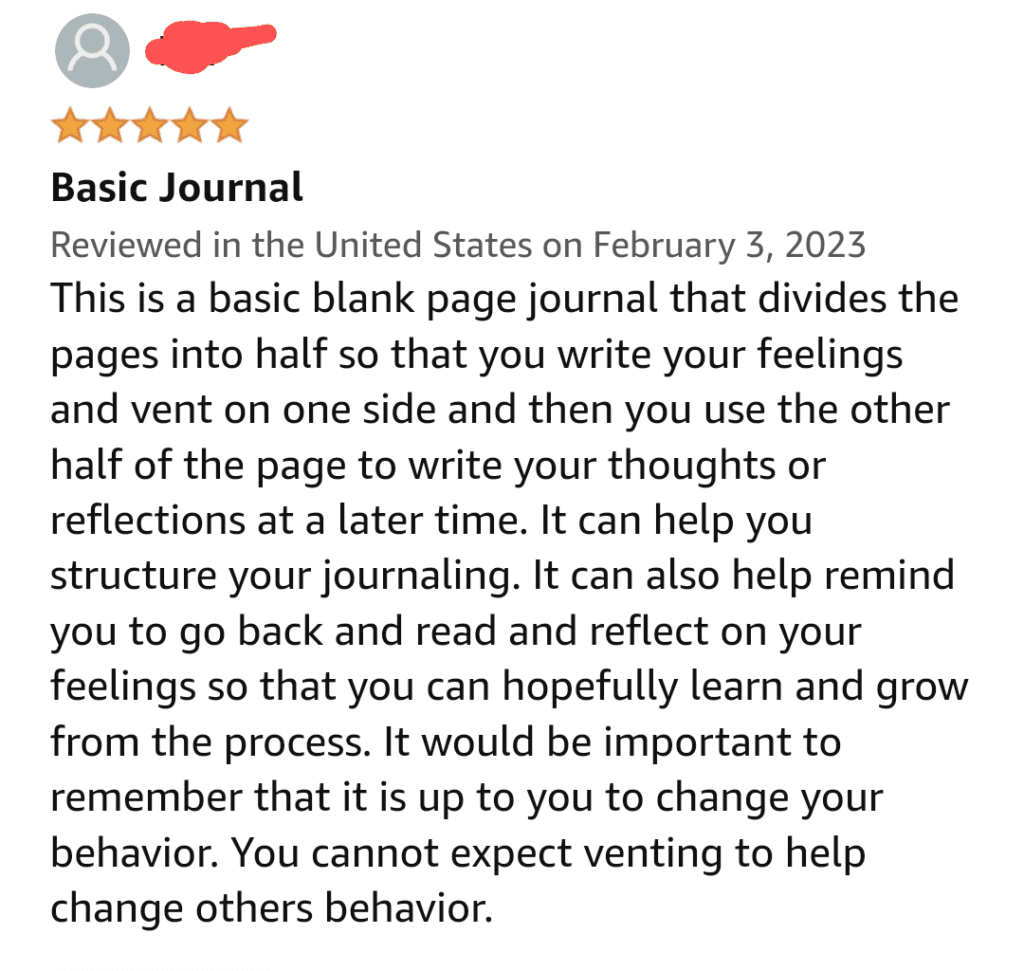
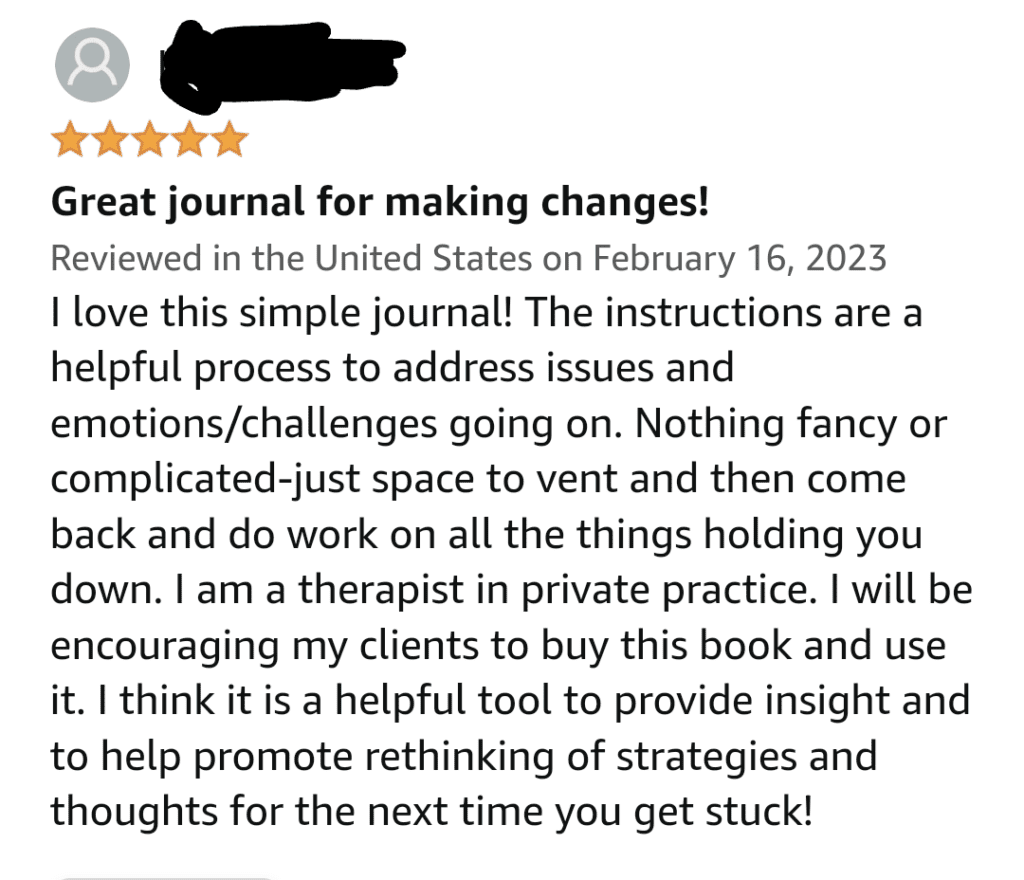
Therapists assign journaling to clients all the time. A therapy journal turns that familiar clinical tool into a product you design once and sell for years. I built mine, the Vent and Reflect Journal, in Canva and published it through Amazon Kindle Direct Publishing (KDP), where it still sells today.
This guide shows you how to create a therapy journal to sell on Amazon, from choosing a method that sets your journal apart to designing it in Canva, publishing it on KDP, and putting it in front of therapists who will use it with their clients.
Why a Therapy Journal Works as a Therapist Side Hustle
A journal asks for your hours once. You design the interior and cover, upload two files to KDP, and Amazon prints each paperback as orders come in, so you skip inventory and shipping entirely.
It also sits squarely inside your expertise. You already know which prompts help a client open up, which ones overwhelm, and how a writing assignment carries into the next session. That knowledge is what separates a therapy journal from the thousands of generic notebooks on Amazon.
The research gives you a credible foundation as well. In a controlled study of outpatient psychotherapy clients, those assigned expressive writing homework showed greater reductions in anxiety and depressive symptoms than a writing control group (Written Emotional Disclosure, PubMed). The broader literature is mixed, though. A 2023 review in Frontiers in Psychology notes that three meta-analyses support the benefits of writing about emotions while three others found null effects (Frontiers in Psychology). Describe your journal as a supportive tool with a research basis, and let the evidence speak at its actual strength.
Build Your Journal Around a Method
Buyers pay for structure. A blank page leaves all the work to the writer, while a method, a prompt, or a weekly review page carries some of it, which makes journaling easier to start and easier to keep up with. Blank notebooks flood Amazon, and a named method gives buyers a reason to choose yours. My Vent and Reflect Method has two steps: clients first write freely to release emotions, then return to those entries later to look for patterns, triggers, and progress they can bring to session.

The structure also lines up with the research. Pennebaker and Chung report that in the very first expressive writing study, people who wrote only about the facts of a trauma showed no improvement, and they argue that emotional expression and cognitive work both play a part (Pennebaker and Chung). A vent step followed by a reflection step gives clients room for both.
Before you open Canva, write your journal’s promise as one sentence, such as “a vent-and-reflect journal for clients working through stress between sessions.” If you can’t say it in one sentence, your cover won’t be able to either. Keep the promise achievable too. A journal that asks for ten minutes of writing every day tends to get abandoned, while one that asks for a few lines is far more likely to get finished and recommended.
Once you have your method, name your buyers. My sales page speaks to:
- Therapists and counselors (PhD, PsyD, LCSW, LPC, LCADC)
- Psychologists, psychiatrists, and APNs who provide psychotherapy
- Private practice owners and mental health supervisors
- Mental health interns and students
- Clients and anyone working to maintain their mental wellness
That list tells you whose language to use on the cover, in the Amazon description, and in every blog post that points to the journal.
Research the Category Before You Design
Spend an afternoon with the journals already ranking in your category, and read their reviews more closely than their descriptions. Buyer complaints make an excellent design brief. Watch for repeated gripes such as:
- Pages too crowded to write on
- Prompts that sound generic or repetitive
- Covers that feel thin in person
- Interiors that look like a free printable
If your journal consistently solves one of those complaints, it has a clear reason to exist in a crowded category.
How to Create a Therapy Journal to Sell on Amazon, Step by Step
Step 1: Choose your trim size
Your trim size is the final size of the printed book, and it shapes your page count and printing cost. KDP names 6 x 9 inches as the most common trim size for books in the U.S. and suggests checking similar books to see what readers expect (KDP: Prepare Your Manuscript). Each trim size carries its own minimum and maximum page counts, listed on KDP’s trim size page (KDP: Set Trim Size, Bleed, and Margins).
Let the purpose guide the format. A journal meant as a gift can lean premium, one that travels in a bag should stay portable, and one written for daily use needs to hold up to heavy use. KDP specifications change over time, so confirm current trim, paper, and cover options on KDP’s help pages before you build your layout.
Step 2: Design the interior in Canva
Create a Canva design at your exact trim size. If any design element runs to the edge of the page, KDP asks you to add 0.125 inches to the width and 0.25 inches to the height (KDP Paperback Submission Guidelines). Build these pages, in order:
- Front matter: a title page, a “how to use this journal” page that teaches your method, and a short note on what the journal is and is not
- The repeating spread: the daily or weekly page that carries your prompts and writing space
- Check-in pages: occasional review pages that break up the repetition
- Back pages: open notes space, your disclaimer, and a link to your website
Two design rules matter more than decoration. Leave generous writing room, since cramped pages are a common complaint in journal reviews, and keep every prompt short enough to read at a glance. The “what this journal is” note deserves two plain lines stating that the journal is a self-reflection tool and no substitute for professional care.
If you add ruled lines, give them a weight of at least 0.75 point, the minimum KDP sets for lines (KDP Paperback Submission Guidelines). Export the finished interior as a PDF.
Step 3: Design the cover in Canva
A KDP paperback needs two files: the interior manuscript and a cover file that wraps the front, spine, and back (KDP: Format Your Paperback). Your spine width depends on your final page count, so finish the interior first, then calculate the cover dimensions with KDP’s formula. KDP also offers Cover Creator if you would rather build the cover inside its dashboard (KDP Paperback Submission Guidelines). Design the front to read clearly at thumbnail size, since that is how most shoppers first see it.
Step 4: Set up your book on KDP
KDP generally treats journals with repeating fill-in pages as low-content books, and those are not eligible for a free KDP ISBN. You can use your own ISBN or publish without one. If you publish without an ISBN, KDP places a barcode in a 2 x 1.2 inch box in the lower right corner of your back cover, so keep that area free of text and images (KDP: Low-Content Books). Your ISBN choice locks once you publish, so decide before you click the button.
Write your Amazon description around the method and the buyer. Tell therapists how the journal works in session, and tell individual buyers what the writing process feels like.
The upload itself moves quickly. From your KDP Bookshelf:
- Create a new paperback title
- Enter the title, subtitle, author name, description, keywords, and categories
- Upload your interior and cover PDFs
- Open the previewer and page through the book the way a reader would
- Review pricing, confirm your details, and publish
The previewer catches problems that look fine in Canva, such as text too close to the edge or a cover that misaligns with the spine. Fix them before you publish.
Treat the listing as part of the product. Put the clearest description of the journal in the title and subtitle, choose categories that match what the journal does, write the description in plain language about the page structure and who it serves, and fill the keyword fields with the phrases your buyers type, including how they describe their problem.
Step 5: Order a proof, set your price, and publish
Order a printed proof before launch. Holding the book shows you line weight, margins, and cover color in a way a screen never will. Set your price by comparing similar therapy and self-reflection journals, then check KDP’s royalty estimate on the pricing page to confirm your margin.
Market Your Journal With a Product Page and a Blog
Amazon handles printing and checkout, and your website does the persuading. Give your journal its own product page that explains the method, shows who it serves, and sends visitors to Amazon with a clear button. Then write blog posts that answer the questions your buyers search for, such as journaling prompts for anxious clients or how to assign writing between sessions, and link each one to the product page.
A few more habits keep sales moving:
- Offer a free sample page in exchange for an email address
- Add the journal to your email signature and welcome sequence
- Share photos of the inside pages on social media, since the interior is what buyers want to evaluate
- Partner with a practitioner or wellness creator whose audience overlaps with yours, and return the favor
- Pair it with a companion product, like the one in my guide to creating a coloring book to sell
After launch, let your sales reports and reviews guide the next title. If buyers keep asking for more writing space or a different format, that request becomes your second journal. Publishers who build a catalog tend to treat the first journal as a test.
Want a blog that sends buyers to your journal? I offer done-for-you blogging for therapists with digital products. I write the posts, optimize them for search, and connect each one to your product page. Contact me directly to talk through your product and your goals.
Protect Yourself With a Clear Disclaimer
My journal’s sales page carries a disclaimer explaining that, although I hold an LCSW license in New Jersey, the journal is a product and cannot evaluate, diagnose, or treat anyone. It also includes a personal-use license that prohibits resale and redistribution. Consider similar language for your own product, and place a short version inside the journal itself.
Licensing boards and employers set their own rules about promoting products, and those rules vary by state and setting. Check your licensing board’s guidance and your professional liability insurer’s expectations, especially before marketing a product to people you work with, and ask an attorney to review your disclaimer language. This section is general information and does not constitute legal advice.
Mistakes That Slow Down New Journal Sellers
- Designing the journal you want instead of the one your buyer searches for
- Publishing a plain notebook with no method or prompts to set it apart
- Crowding pages until there is no room to write
- Designing the cover before the interior, then redoing it when the spine width changes
- Placing text where KDP’s barcode will print
- Treating the listing description as an afterthought
- Skipping the proof copy
- Marketing a self-reflection product as clinical care, or making health claims the research does not support
- Stopping after one title before the market has responded
A Realistic Word on Earnings
You will find confident income claims about Amazon journals online, along with plenty of publishers who sold very few copies of a single title. Results vary widely with the niche, design, listing, and how consistently you publish. KDP removes the upfront printing cost and inventory risk, which limits what you can lose, and the research, design, and marketing still fall to you. Approach your first journal as a low-cost experiment with a clear question attached.
Frequently Asked Questions
Do I need an ISBN to sell a journal on Amazon?
No. KDP lets you publish low-content books, such as journals, without an ISBN, or you can supply your own. Low-content books are not eligible for a free KDP ISBN (KDP: Low-Content Books).
Can I design a KDP journal entirely in Canva?
Yes. I created my journal in Canva. Set your page size to your trim size, add bleed if your design reaches the page edge, and export PDFs for upload.
Should my journal use prompts or blank pages?
Either works when a method guides the writing. My Vent and Reflect Journal uses blank pages, which gives clients freedom to vent and reflect in whatever form they need, including doodles or poems. Prompts suit buyers who want more direction.
Can I say my journal reduces anxiety or depression?
Be careful here. Research on expressive writing is promising and mixed, so describe your journal as a supportive tool, cite studies accurately, and avoid promising clinical outcomes.
Start Your Journal This Week
Write out your method in one paragraph, then open Canva and build your “how to use this journal” page first. When your method reads clearly on a single page, the rest of the book follows. Want to see a finished example?
Sources
- Amazon KDP. “Format Your Paperback.” https://kdp.amazon.com/en_US/help/topic/G201834190
- Amazon KDP. “Low-Content Books.” https://kdp.amazon.com/en_US/help/topic/GGE5T76TWKA85DJM
- Amazon KDP. “Paperback Submission Guidelines.” https://kdp.amazon.com/en_US/help/topic/G201857950
- Amazon KDP. “Prepare Your Manuscript.” https://kdp.amazon.com/en_US/help/topic/G202187840
- Amazon KDP. “Set Trim Size, Bleed, and Margins.” https://kdp.amazon.com/en_US/help/topic/GVBQ3CMEQW3W2VL6
- Frontiers in Psychology (2023). “Chasing elusive expressive writing effects: emotion-acceptance instructions and writer engagement improve outcomes.” https://www.frontiersin.org/journals/psychology/articles/10.3389/fpsyg.2023.1192595/full
- Pennebaker, J. W., and Chung, C. K. “Expressive Writing, Emotional Upheavals, and Health.” https://c3po.media.mit.edu/wp-content/uploads/sites/45/2016/01/PennebakerChung_FriedmanChapter.pdf
- PubMed. “Written emotional disclosure: a controlled study of the benefits of expressive writing homework in outpatient psychotherapy.” https://pubmed.ncbi.nlm.nih.gov/18815991/